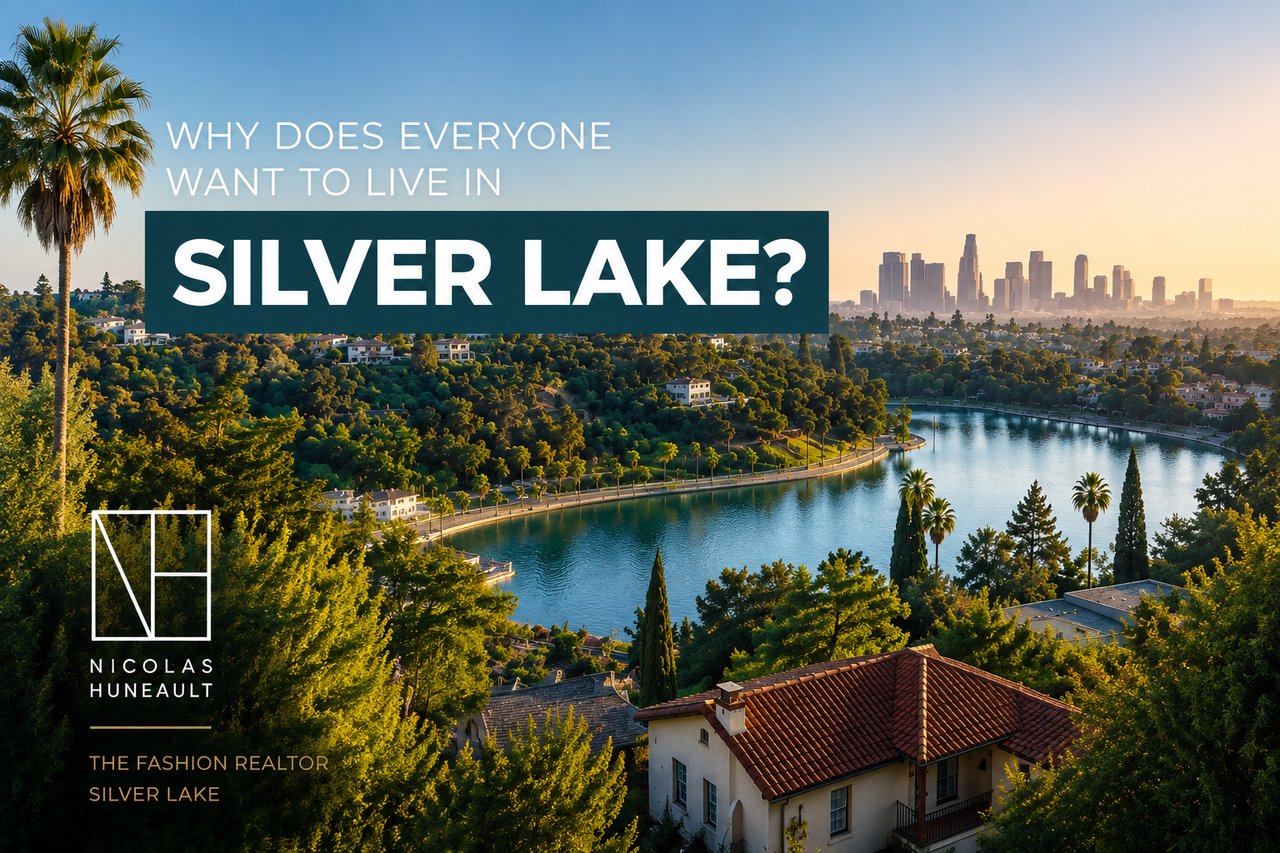
Why Does Everyone Want to Live in Silver Lake?
The appeal of Silver Lake goes far beyond the reservoir. Here’s what continues to draw buyers to one of Los Angeles’ most distinctive neighborhoods.
People don't move to Silver Lake simply because it's convenient. They move here because they want Silver Lake.
There's a distinction.
The hills, the architecture, the reservoir, Sunset Junction, the restaurants and shops, and even the occasionally complicated streets all contribute to something surprisingly difficult to manufacture in Los Angeles: a neighborhood with a recognizable identity.
And that's a big part of why Silver Lake continues to attract buyers who could choose to live in many different parts of the city.
It Actually Feels Like a Neighborhood
Los Angeles is enormous, and one of the biggest adjustments for people moving here is realizing that you don't really choose Los Angeles—you choose your version of Los Angeles.
Silver Lake has several pockets that feel distinctly different from one another. Life around the reservoir isn't the same as living closer to Sunset Junction. The hills can feel almost removed from the city, while areas closer to Sunset Boulevard put restaurants, coffee shops and neighborhood businesses within easier reach.
That variety is part of the appeal.
You can spend a Saturday morning walking around the reservoir, meet someone for lunch on Sunset, and a few minutes later be back home on a quiet hillside street surrounded by mature landscaping and views across the city.
For Los Angeles, that's a pretty compelling combination.
The Architecture Has Personality
One of the things I love most about Silver Lake is that the homes don't all look alike.
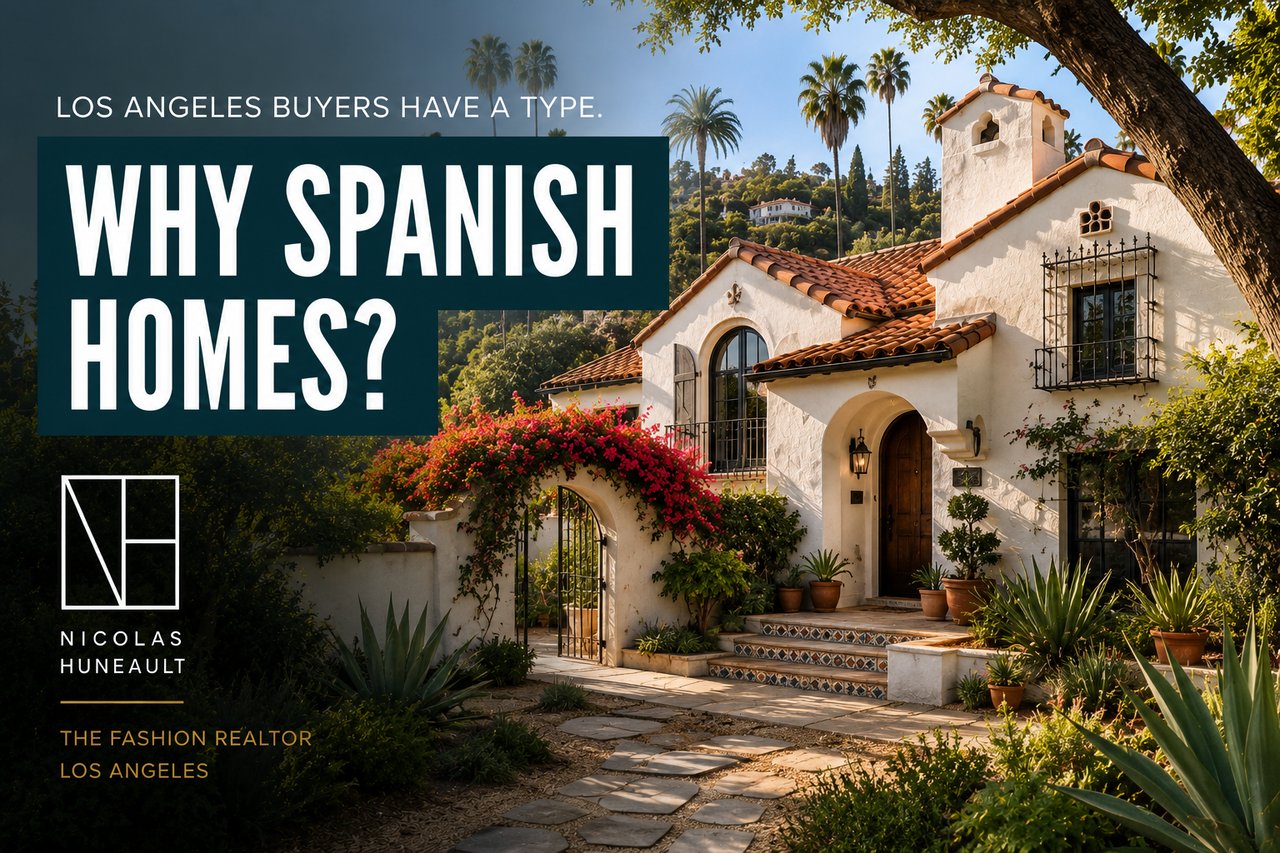
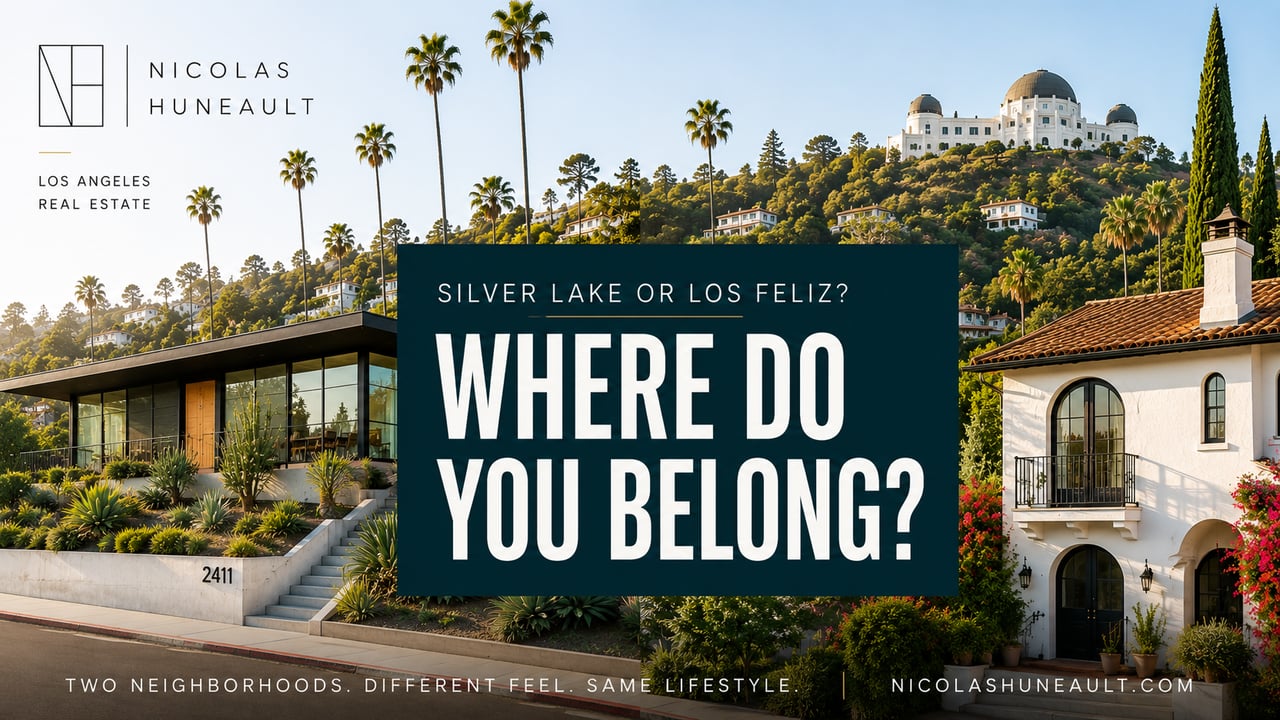
You'll find Spanish homes, Mid-Century Modern architecture, contemporary houses, bungalows and properties that have evolved in interesting ways over decades.
Silver Lake also has an important place in Los Angeles' architectural history.
Several homes connected to the influential Case Study House program were built in and around the neighborhood, including houses designed by architects such as Richard Neutra. Neutra's own VDL Research House still stands on Silver Lake Boulevard and is one of the neighborhood's most recognizable architectural landmarks.
That history matters because architecture here isn't simply something people talk about after buying a house. For many buyers, it's one of the reasons they're looking in Silver Lake in the first place.
Then There's the Reservoir
It's difficult to talk about Silver Lake without talking about the reservoir.
Not because everyone necessarily lives beside it, but because it gives the neighborhood a geographic and social center.
The paths and green spaces around the reservoir bring together runners, walkers, families, dogs, friends catching up and people doing what Angelenos occasionally forget we're capable of doing: walking somewhere.
It contributes to the sense that Silver Lake is more than a collection of houses.
There's a community around them.
Sunset Junction Gives Silver Lake Another Center
Then there's the other side of Silver Lake life: Sunset Boulevard.
Around Sunset Junction, independent businesses, restaurants, cafés and shops give the neighborhood an energy that feels quite different from the quieter residential streets above it.
It's one of the reasons Silver Lake can appeal to someone who wants the privacy and space of a house without feeling completely disconnected from city life.
And for buyers relocating from cities where walking to coffee, dinner or a neighborhood shop is part of everyday life, that can be particularly appealing.
But Silver Lake Isn't for Everyone
This is the part that sometimes gets left out of neighborhood guides.
The same things that give Silver Lake its personality can also make buying here more complicated.
Hills can mean views and privacy, but they can also mean narrow streets, steep driveways and limited parking. Two homes that appear very close together on a map can offer completely different experiences.
Walkability varies dramatically depending on exactly where you live.
Lots, orientation, natural light, street traffic and elevation can change within just a few blocks.
And the housing itself can require careful evaluation. Older homes may have been renovated multiple times, and beautiful architecture doesn't automatically mean a property has been beautifully maintained.
That's why I think buying in Silver Lake requires looking beyond the ZIP code—or even the listing photographs.
The street matters. The block matters. And sometimes which side of the street you're on matters.
So, Why Silver Lake?
Ultimately, I think Silver Lake attracts people who aren't simply looking for the biggest house their budget can buy.
They're looking for character.
They care about architecture. They want restaurants and neighborhood businesses nearby. They appreciate mature landscaping, interesting streets, creative energy and a neighborhood that doesn't feel interchangeable with somewhere else.
There are certainly easier places to live in Los Angeles.
But that's almost beside the point.
Silver Lake isn't trying to be everything to everyone—and that may be exactly why so many people want to live here.
Thinking About Living in Silver Lake?
Choosing the right home here often starts with choosing the right part of Silver Lake.
If you're considering buying, selling or relocating to the neighborhood, I'm always happy to talk through the different pockets, streets and types of homes—and help you determine what actually makes sense for the way you want to live in Los Angeles.
Nicolas Huneault
Los Angeles Real Estate | Compass