There are certain homes in Los Angeles that buyers react to almost immediately.
A beautifully preserved Spanish home is one of them.
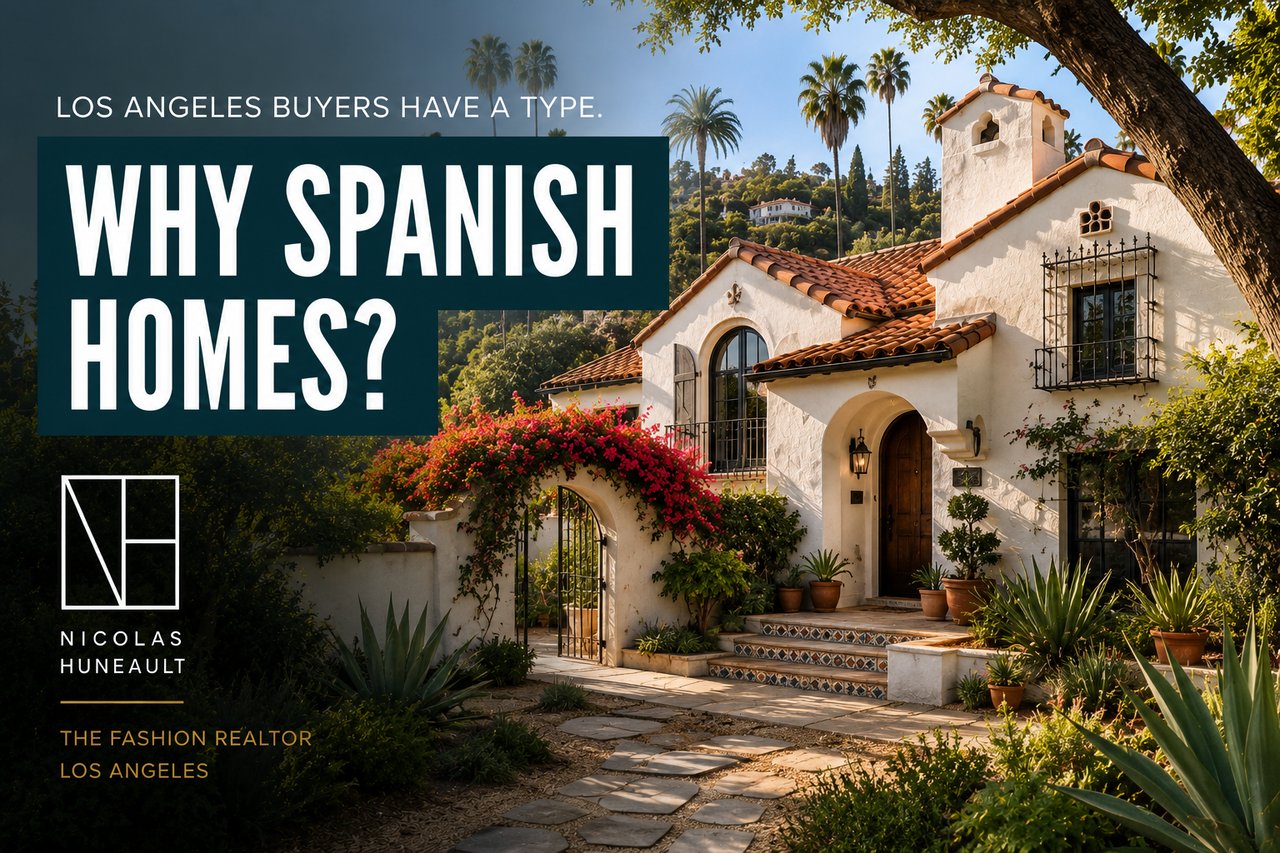
You walk through an arched doorway, see the textured stucco walls, original tile, maybe a courtyard or a living room with a beamed ceiling, and suddenly the conversation changes.
The buyer is no longer asking only about square footage.
They're imagining living there.
And that emotional reaction is a big part of why Spanish-style homes continue to have such staying power in Los Angeles.
The Style Is Part of Los Angeles History
Spanish Colonial Revival architecture became especially prominent in Southern California during the 1920s and 1930s, drawing from Spanish, Mexican and Mediterranean influences and from California’s own architectural history. The style became deeply associated with Southern California during that period.
Architects including George Washington Smith and Wallace Neff helped shape the style into something distinctly Californian, using traditional influences in ways that responded to the region’s climate and lifestyle.
That history still matters today.
When you buy a great Spanish home in Los Angeles, you're often buying something that feels very connected to the city itself.
It doesn't look like a house that could be anywhere.
The Architecture Works With the Climate
One reason Spanish homes feel so natural here is that many of their defining features make sense in Southern California.
Thick stucco walls. Low-pitched red-tile roofs. Arched openings. Courtyards. Covered outdoor spaces. Decorative ironwork. Tile.
Those features are visually beautiful, but they also help create a strong relationship between indoors and outdoors.
A courtyard can become another room.
French doors can connect a living space to a terrace.
An arched opening can frame a garden almost like a painting.
And because we spend so much of the year outside in Los Angeles, that connection feels particularly relevant.
They Usually Have Something New Homes Have to Work Hard to Create
Character.
That word gets overused in real estate, but with a good Spanish home, you understand exactly what it means.
The imperfections are often part of the appeal.
The plaster isn't necessarily perfectly smooth. Rooms may not be completely symmetrical. A doorway may have a slightly unusual proportion. Original tile may show its age.
And somehow, those details make the house feel richer rather than less polished.
A brand-new home can absolutely be beautiful.
But history is difficult to manufacture.
Buyers Respond to the Details
Certain details can completely change how a Spanish home feels.
Original or period-appropriate tile.
Wrought iron.
Wood beams.
Plaster walls.
A fireplace with real presence.
Arched doors and windows.
A courtyard that feels like it belongs to the architecture rather than something added later.
What matters isn't necessarily whether every detail is original.
It's whether the house still feels coherent.
That distinction becomes particularly important when these homes are renovated.
The Renovation Can Make or Break It
Some of the best renovated Spanish homes manage to feel completely current while preserving what made the house interesting in the first place.
The kitchen works for how people live today.
Bathrooms feel updated.
Systems have been modernized.
But the architecture still leads.
Then there are renovations where every original detail disappears and the interior could belong to almost any newly remodeled house in Los Angeles.
White drywall.
Generic recessed lighting.
A kitchen that looks exactly like the kitchen in every other flip.
At that point, you've kept the red-tile roof but lost much of what made the house special.
For buyers who specifically want Spanish architecture, that can matter.
Modernizing a house and erasing its personality are not the same thing.
They Can Feel Formal and Relaxed at the Same Time
This may be one of the qualities buyers respond to most.
Spanish homes can have architectural drama—arched openings, staircases, fireplaces, courtyards—without necessarily feeling precious.
A living room can feel grand and still comfortable.
A formal dining room can open directly onto a garden.
A beautiful entry can lead into a house that ultimately feels very easy to live in.
That combination works particularly well in Los Angeles, where people often want a home that feels special but not overly formal.
Some Neighborhoods Just Wear the Style Particularly Well
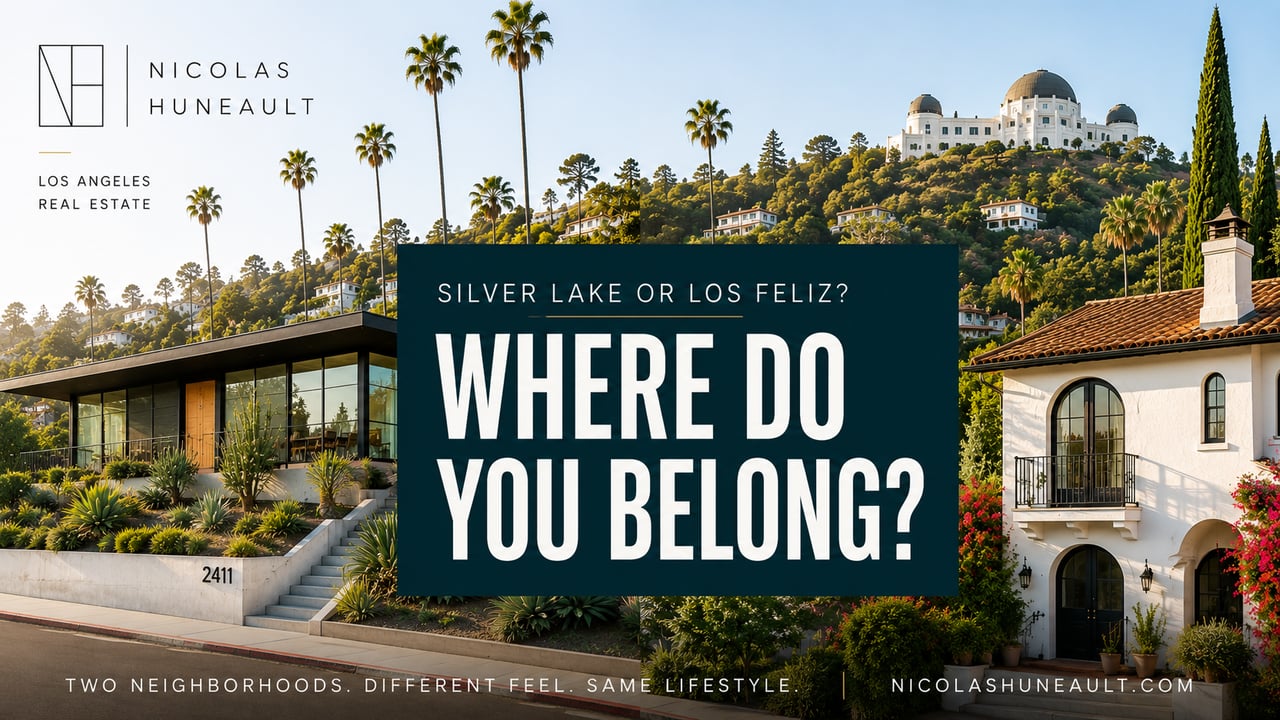
Spanish Colonial Revival homes can be found throughout Los Angeles, including Los Feliz, Hancock Park, Carthay, Miracle Mile and other neighborhoods with significant concentrations of period architecture.
But even within those neighborhoods, the experience varies enormously.
A Spanish home tucked into a hillside in Los Feliz can feel completely different from one on a broad, tree-lined street farther west.
The architecture may share the same vocabulary, but the setting changes the experience.
Which is another reason buyers often fall in love with a particular house, not simply a style.
Original Doesn't Automatically Mean Better
This is an important distinction.
Preservation is wonderful when the original details are beautiful, functional and worth saving.
But age alone doesn't make something good.
A badly configured kitchen isn't valuable just because it's old.
An original bathroom may be charming—or it may genuinely need work.
The best decisions usually come from understanding which elements define the character of the home and which ones can evolve without compromising it.
I think the strongest renovations respect that hierarchy.
Why Do Buyers Keep Coming Back to Them?
Partly because they're beautiful.
Partly because they're recognizable.
And partly because a great Spanish home offers something buyers increasingly value:
a sense of identity.
In a city where new construction can sometimes feel interchangeable, a home with architectural history and a strong point of view can feel very different.
You aren't simply buying bedrooms, bathrooms and square footage.
You're buying arches, courtyards, tile, light, history and the feeling of living in a house that could really only belong in Southern California.
And that is difficult to reproduce.
Looking for a Spanish Home in Los Angeles?
The best examples aren't necessarily the most renovated or the largest.
They're the ones where the architecture, setting and updates still work together.
If you're looking in Los Feliz, Silver Lake, the Hollywood Hills or surrounding neighborhoods, understanding those details can make the difference between buying a house that simply looks Spanish—and one that actually feels special.
Nicolas Huneault
Los Angeles Real Estate | Compass